
7 Ways to Protect Your Health When Life Gets Busy
- Dr. Scott Stiffey

- Aug 4
- 3 min read
When schedules become demanding, many people begin removing anything that does not feel immediately urgent.
Unfortunately, health habits are often the first things to go.
Exercise gets skipped.
Sleep becomes shorter.
Appointments are postponed.
Meals become less intentional.
Stress continues to build while recovery time disappears.
The problem is that busy seasons place greater demands on your body.
You need more energy, focus, mobility, and resilience—not less.
Protecting your health does not require a perfect routine.
It requires preserving a few important habits that help you continue functioning well.
1. Keep Important Health Appointments
It is easy to cancel a health appointment because of work, errands, or family responsibilities.
However, repeatedly postponing care may allow minor issues to become more disruptive.
Treat important health appointments like any other priority.
Put them on the calendar and avoid moving them unless it is absolutely necessary.
2. Protect Your Sleep
Sleep is often sacrificed when people feel behind.
Unfortunately, sleeping less can leave you feeling tired, less focused, and less prepared to manage stress.
A consistent bedtime, reduced evening screen use, and a calming nighttime routine can make a meaningful difference.
You may not be able to get perfect sleep every night, but you can avoid treating sleep as optional.
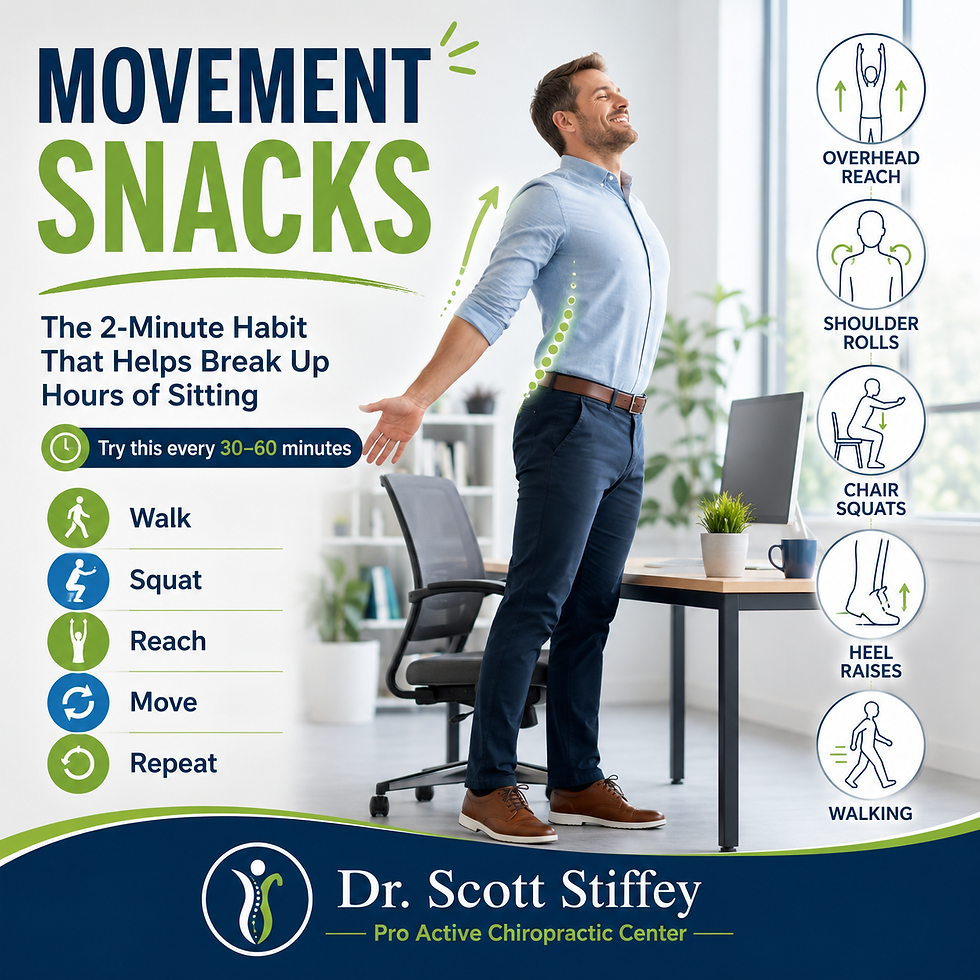
3. Use Short Movement Breaks
A workout does not have to last an hour to be valuable.
A short walk, a few mobility exercises, light stretching, or several minutes of movement between tasks can help interrupt long periods of sitting and stiffness.
Small movement breaks are often easier to maintain during demanding weeks.
4. Make Healthy Choices More Convenient
When time is limited, convenience usually wins.
Prepare simple meals ahead of time.
Keep healthier snacks available.
Carry a water bottle.
Create an environment that makes the healthier choice easier.
You do not need a complicated nutrition plan.
You need practical options that still work when your day becomes unpredictable.
5. Schedule Recovery Time
Constant activity without recovery eventually takes a toll.
Recovery may include sleep, quiet time, breathing exercises, gentle movement, time outdoors, massage, chiropractic care, acupuncture, or another activity that helps you reset.
Recovery is not wasted time.
It helps prepare you for the next demand.
6. Notice Early Warning Signs
Do not ignore increasing stiffness, reduced mobility, poor sleep, persistent fatigue, headaches, or other changes simply because you are busy.
Your body often gives you warning signs before it forces you to stop.
Responding early may be easier than waiting until the problem becomes more limiting.
7. Stop Waiting for the Perfect Time
Many people plan to prioritize their health once work slows down, the holidays end, the children’s schedules change, or life becomes less stressful.
That perfect time may never arrive.
Health is built during ordinary, imperfect, busy days.
Focus on what you can consistently protect now.
Final Thought
Your health is not another obligation competing for time.
It is the foundation that helps you meet your obligations.
When life gets busy, do not eliminate every habit that supports your body and mind.
Keep the appointment.
Take the walk.
Protect your sleep.
Make the next healthy choice.
The more life demands from you, the more important it becomes to protect the health that allows you to keep going.
FREQUENTLY ASKED QUESTIONS
Why do people neglect their health when they get busy?
Urgent tasks tend to receive immediate attention, while health habits may not feel urgent until symptoms or limitations appear. This makes exercise, sleep, healthy food, and appointments easier to postpone.
How can I stay healthy when I have very little free time?
Focus on small actions that are realistic. Short walks, brief mobility breaks, better hydration, simple meal preparation, consistent sleep, and keeping important appointments can all help.
Does a short workout still count?
Yes. Brief periods of movement can be easier to fit into a demanding day and may help reduce prolonged inactivity. Consistency is often more useful than waiting for the perfect workout opportunity.
How can chiropractic care fit into a busy schedule?
Scheduled chiropractic visits can become part of a proactive wellness routine focused on movement, function, and mobility. Your chiropractor can discuss a care schedule that fits your individual needs and goals.
What is the most important health habit to protect?
The answer differs from person to person, but sleep, movement, nutrition, stress management, and appropriate healthcare are all important. Start by protecting the habit that has the greatest effect on how you feel and function.
Should I wait until I feel worse before making an appointment?
It is generally better to address concerns before they become more disruptive. Seek appropriate professional evaluation for new, severe, persistent, or worsening symptoms.


Comments