
7 Signs Your Nervous System May Be Stuck in Stress Mode
- Dr. Scott Stiffey

- Jul 29
- 3 min read

In today’s world, many people are constantly “on.”
They are working, driving, multitasking, looking at screens, sleeping poorly, and carrying both physical and emotional stress.
Over time, the body may begin to reflect that stress through tension, fatigue, poor sleep, stiffness, and poor recovery.
That is one reason nervous system regulation has become a much bigger wellness conversation.
A well-regulated nervous system helps the body shift between activity and recovery.
You need to be able to activate when needed—but you also need to be able to relax, restore, and recover.
When that balance is off, people often notice patterns throughout the body.
Here are 7 signs your nervous system may be stuck in stress mode.
1. You Feel Tired But Wired
One of the most common complaints is feeling exhausted but unable to fully settle down.
People may feel mentally and physically drained, yet their body still feels tense or alert.
2. You Carry Constant Tension
The neck, shoulders, jaw, upper back, and lower back are common areas where stress shows up physically.
If these areas always feel tight, your body may be carrying more physical stress than you realize.
3. Your Sleep Does Not Feel Restorative
Even if you are in bed long enough, you may wake up feeling like you never fully recovered.
Poor-quality sleep can make the body less resilient and more reactive to stress.
4. You Do Not Recover Well
A body that struggles to recover may stay sore longer, feel more fatigued, and have a harder time bouncing back from daily activity, workouts, or stressful days.
5. You Feel Stiff Frequently
When the body stays in one pattern of tension for too long, joints and muscles may feel restricted.
Frequent stiffness may reflect both movement issues and recovery issues.
6. You Feel “On Edge”
Some people feel physically restless, easily irritated, or like they can never fully slow down.
That may reflect an overloaded system that is not shifting well into recovery.
7. Small Stressors Feel Bigger Than They Should
When recovery is poor, the body often becomes less adaptable.
Even minor physical or emotional stress may feel amplified.
What Helps Support Nervous System Regulation?
No single strategy fixes everything, but helpful supports may include:
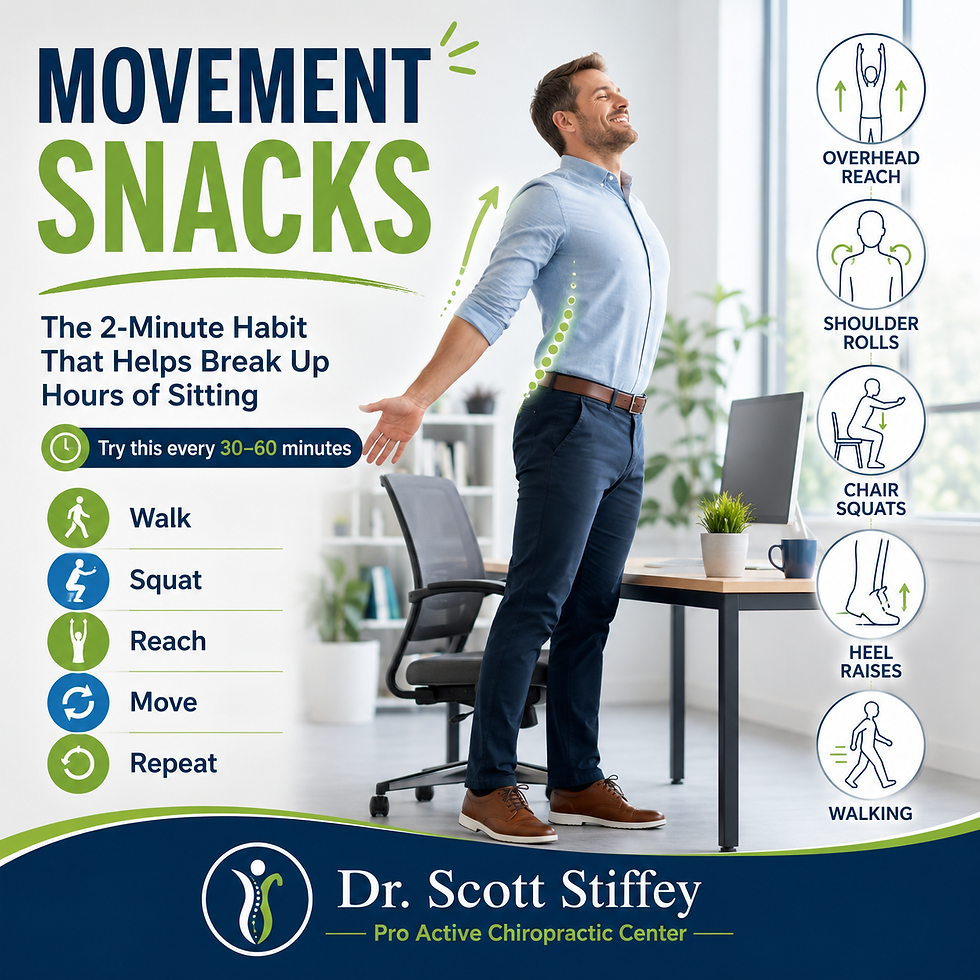
regular movement
walking
mobility work
breathing exercises
better sleep habits
strength training appropriate for your recovery level
posture variation
less prolonged sitting
time outside
chiropractic care
acupuncture
reducing mechanical stress in the body
Where Chiropractic Fits In
Chiropractic care is not about treating every symptom in isolation.
It focuses on helping the spine and joints move better, reducing mechanical stress, and improving function.
When the body moves better and carries less physical stress, many people report they feel looser, more comfortable, and better able to recover.
Chiropractic is best viewed as one part of a broader wellness and recovery strategy.
When to Seek an Evaluation
You may want to be evaluated if you:
feel tense every day
are not recovering well
have recurring neck or back tension
frequently wake feeling unrested
notice persistent stiffness
feel like your body never fully relaxes
At Pro Active Chiropractic Center in Palmyra, Dr. Scott Stiffey helps patients improve mobility, function, and recovery through chiropractic care and other conservative services.
Serving Palmyra, Quincy, Hannibal, Canton, La Grange, Monroe City, and surrounding communities.
If your body feels stuck in stress mode, it may be time to look deeper than symptoms alone.
23. FAQ SECTION
What does nervous system regulation mean?
It refers to how well the body shifts between alertness, activity, and recovery. A well-regulated system can activate when needed and also relax when appropriate.
What does “stuck in stress mode” mean?
It generally refers to a body that seems to stay biased toward tension, alertness, and poor recovery for too long.
Can stress affect the body physically?
Yes. Stress can show up as muscle tension, poor sleep, headaches, stiffness, fatigue, and difficulty relaxing.
Can chiropractic help with stress?
Chiropractic care may help reduce physical tension and improve joint motion and function. It is not a cure-all, but it may be a helpful part of a broader recovery strategy.
What are signs of poor recovery?
Feeling tired but wired, waking unrefreshed, constant muscle tension, frequent stiffness, and difficulty relaxing are common examples.
What else may help nervous system regulation?
Movement, sleep improvement, breathing exercises, regular exercise, posture changes, reduced sitting, and time outdoors may all help.


Comments